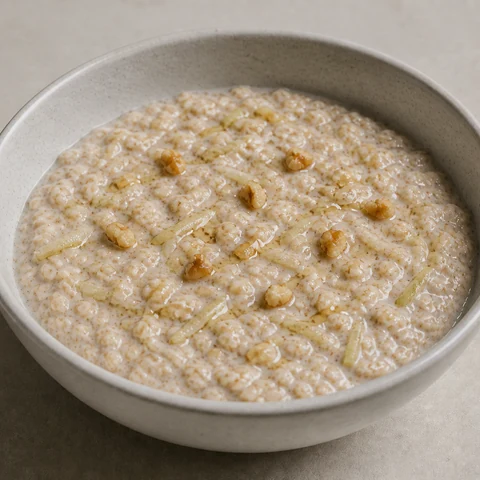
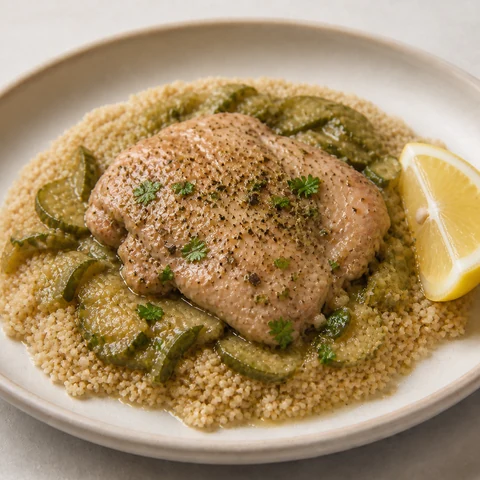
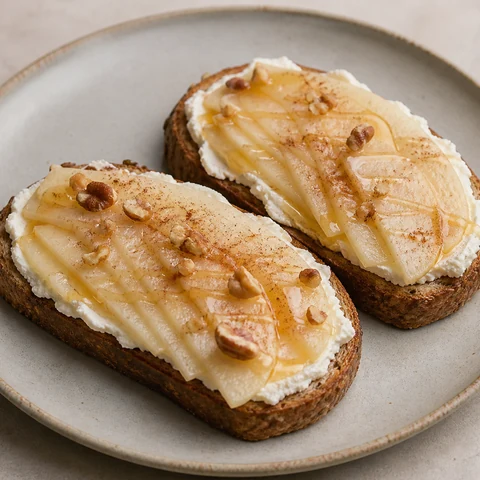
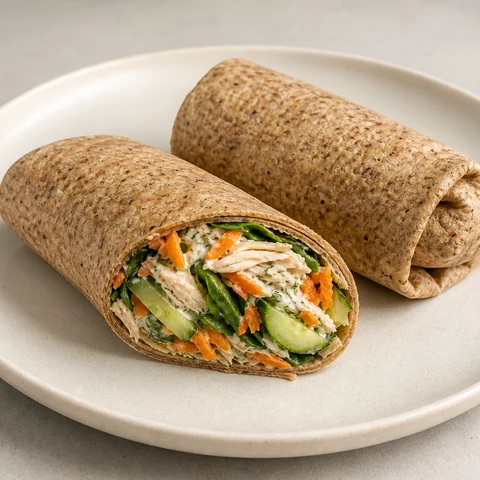
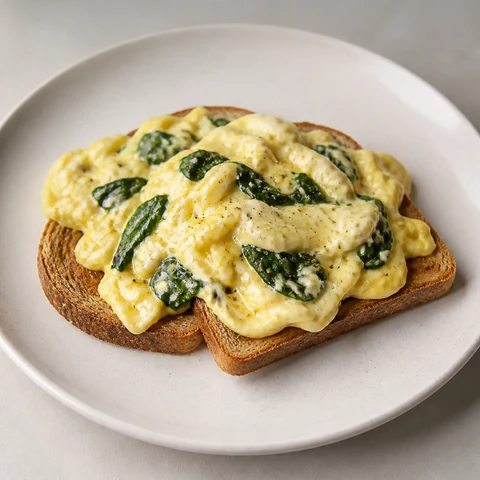
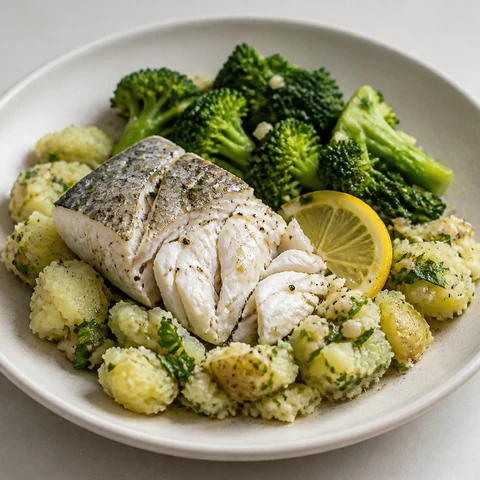
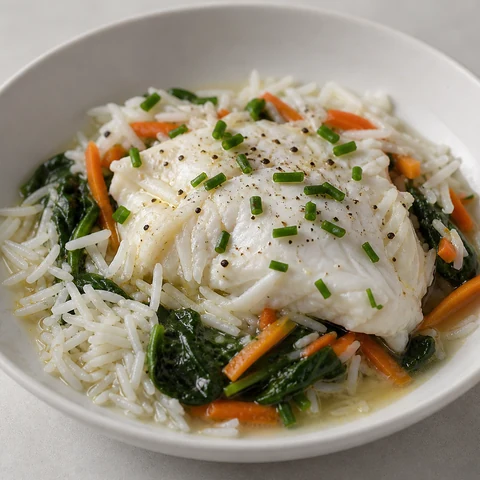
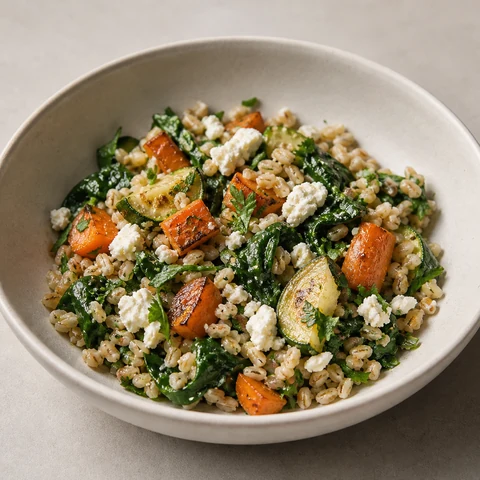
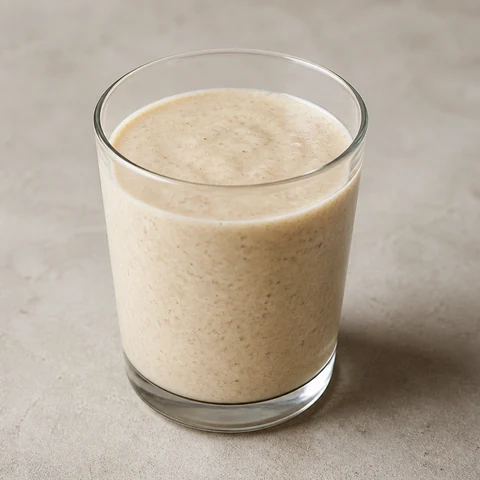
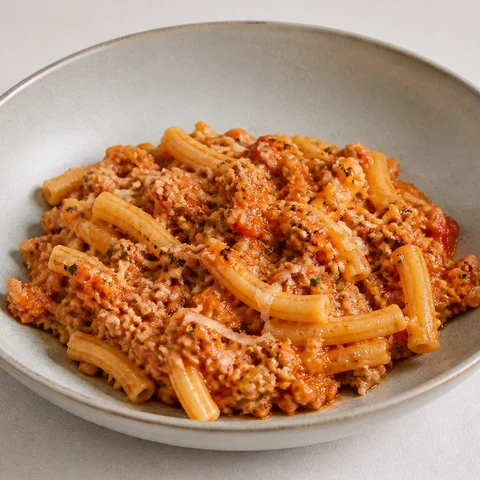
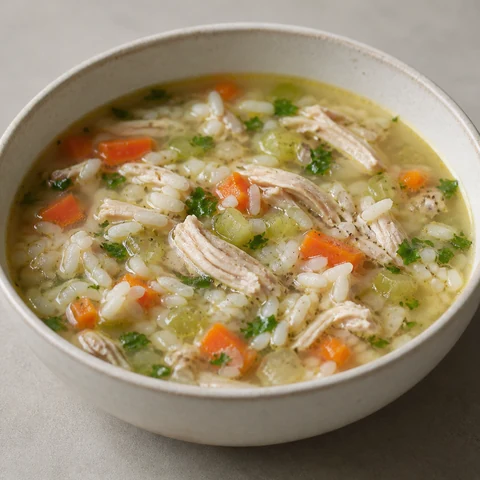
Seven days of ordinary food in moderate portions, with the heavier meal at lunch and a lighter one in the evening, all 21 recipes and a printable shopping list. This is not a reflux elimination diet: the evidence does not support one banned-food list for everyone, so onion, garlic, tomato and citrus appear where the cooking wants them and the recipes that carry a commonly reported trigger say how to leave it out. A rotation to cook from alongside your treatment.
Everyday cooking that takes reflux seriously: your own triggers rather than a blanket banned list, and evenings that sit lighter before bed, which is what current guidance supports. It works alongside your treatment, and some symptoms need a doctor rather than a different dinner.
Nothing here needs cooking. These are a list to choose from rather than part of the seven days above: the plan counts breakfast, lunch and dinner, so whatever you add from here is on top of that. The energy shown is for everything in the line.
a small handful of almonds (35 g) — 200 kcal / 835 kJ · 0 mg sodium
small and easy to carry, so a gap between meals does not turn into a large one
wholegrain toast with ricotta (40 g bread, 60 g ricotta) — 186 kcal / 779 kJ · 269 mg sodium
These are the sources behind the food choices in this week. We are not clinicians and this is not a treatment plan; if you want to check the reasoning, or hand it to someone who can, start here.
Katz PO, Dunbar KB, Schnoll-Sussman FH, et al. ACG Clinical Guideline for the Diagnosis and Management of Gastroesophageal Reflux Disease. Am J Gastroenterol. 2022;117(1):27-56.
Yadlapati R, Gyawali CP, Pandolfino JE. AGA Clinical Practice Update on the Personalized Approach to the Evaluation and Management of GERD. Clin Gastroenterol Hepatol. 2022;20(5):984-994.e1.
American Society for Gastrointestinal Endoscopy. Guideline on the diagnosis and management of GERD: summary and recommendations. Gastrointest Endosc. 2025.